It Was A Beautiful Day At The Botanic Gardens - Presented By The William Murphy - The Urban Cartographer
LET MISTER SCREEN ASSIST YOU
GLOBAL INDEXTHE CURRENT PHOTO DIARY
GO THEREThe Urban Cartographer
TECHNICAL STUFFMOBILE FRIENDLY AND FASTER
GO THEREA September walk through the National Botanic Gardens in Glasnevin exploring the past, hiatus, and future of Sculpture in Context, featuring detailed examinations of Bob Quinn's Best Night Ever and Nasser Azam's biomorphic bronze Sepian Blue.
MURALS BY SHANE SUTTON
SONY FX30
It Was A Beautiful Day At The Botanic Gardens - Presented By William Murphy - The Urban Cartographer - Sony FX30 Photographed 14 September 2026
It Was A Beautiful Day At The Botanic Gardens
Author: William Murphy - The Urban Cartographer
|
15. Sep 2026
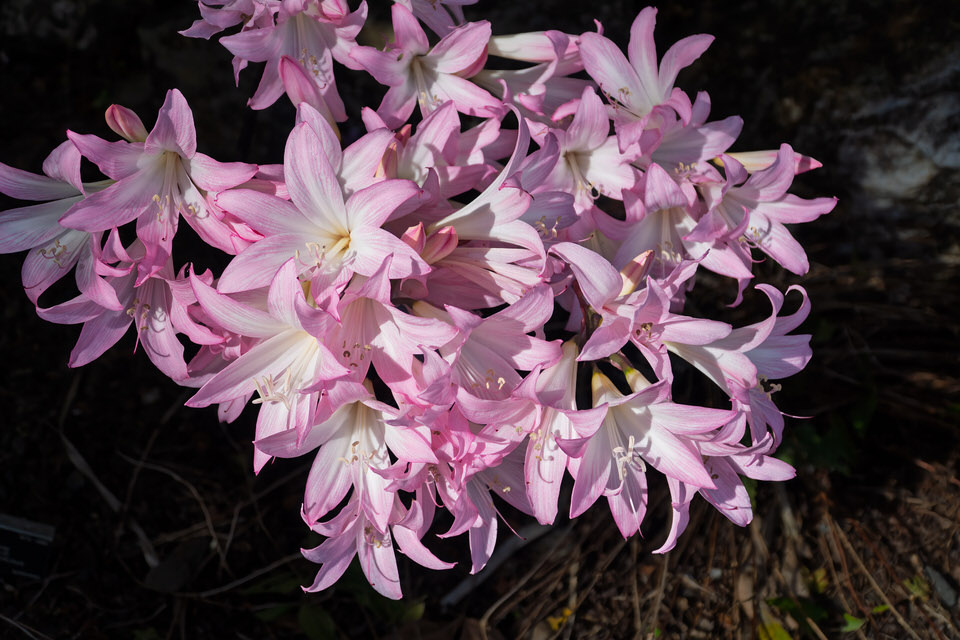
Sony FX30 and a Sony E PZ 18-105mm f/4 G OSS A clear September afternoon at the National Botanic Gardens in Glasnevin offers a contemplative atmosphere, even during a quiet year for Irish public sculpture. With the hiatus of Sculpture in Context in 2026 due to logistical demands surrounding Ireland’s EU presidency, the grounds still hold notable permanent and long-standing bronzes in dialogue with the landscape. Founded in 1985 by sculptors Cliodhna Cussen, Gerard Cox, and Colm Brennan, Sculpture in Context was created to liberate three-dimensional art from formal indoor galleries. After early venues at Fernhill Gardens, Malahide Castle, and Kilmainham Gaol, the event found its natural home at the National Botanic Gardens in 2002. The 2026 hiatus allows breathing space after four decades of volunteer stewardship. Handing over organisation to a new team in 2027 provides an opportunity to restructure administrative workflows, explore fresh curation themes, and establish stronger links between emerging Irish sculptors and international practitioners. A new organising body will inherit the vital task of balancing wide public access with the botanical sensitivities of a working scientific institution. The Botanic Gardens do not merely host sculpture; they actively shape how each piece is perceived: Organic Scale and Framing: Sweeping open lawns and mature specimen trees establish long sightlines that give heavy bronze pieces room to breathe. Microclimates and Historic Vistas: The curved ironwork and reflective glass of the Turner Curvilinear Range and the Great Palm House create a grand architectural counterpoint to outdoor patinated metal. Shifting Light: Early autumn sunlight filters through high canopies, constantly altering the highlights, cast shadows, and silhouette of outdoor work throughout the day. Bob Quinn — Best Night Ever: Positioned gracefully on the lawn with the Great Palm House in the background, Quinn’s tall, textured bronze depicts two slender figures linked arm-in-arm in evening wear. Inspired by his wife's recollection of an uncle asking after a local dance whether they had "the best night ever", the sculpture captures warmth, enduring friendship, and shared memories through quiet vertical posture and gentle physical connection. Nasser Azam — Sepian Blue: Set against the border alongside the glasshouse range, this bronze by the London-based, British-Pakistani artist reflects biomorphic modernism. Characterised by organic contours, grooved striations, and a prominent pierced aperture, the piece invites viewers to look directly through its mass to the greenery behind it. Its deep, variegated dark patination catches ambient light while anchoring the work firmly to the earth. The pairing of the Sony FX30 and the Sony E PZ 18-105mm f/4 G OSS is an exceptionally practical, cinema-focused Super 35 setup. While the lens originally gained fame during the FS5 and early α6000 era, the FX30’s modern cinema architecture unlocks its best operational features while working neatly around its known optical compromises. Ergonomics and Operational Strengths Zoom Lever Integration: The FX30 features a dedicated zoom rocker surrounding the shutter/record button. With this power-zoom (PZ) lens mounted, you can execute smooth, variable-speed zooms directly from the camera body, programmable menu settings, or the side barrel rocker without jarring handheld framing. Internal Zoom and Focus: The lens barrel does not extend when zooming or focusing. This maintains a fixed centre of gravity, making it effortless to balance on gimbals, use on tripods, or manage handheld without front-heavy tipping. Dual Stabilisation (OSS + IBIS): The FX30 features 5-axis in-body image stabilisation (IBIS), and the lens includes Optical SteadyShot (OSS). Combining both provides exceptionally stable handheld footage, while Sony's active stabilisation mode and gyro-data logging (for post-processing in Catalyst Browse) provide additional smoothing for walking shots. Constant f/4 Aperture: The constant maximum aperture avoids exposure changes when zooming from 18mm through to 105mm (a 27–157.5mm full-frame equivalent field of view), which is crucial for video workflows. Image Quality and Sensor Dynamics 6K Oversampling: The FX30 downsamples from 6K to produce sharp 4K footage. The 18-105mm is softest at the telephoto end (around 85–105mm) and at extreme edges, but the centre resolves very well, offering a pleasing, gently rolled-off look rather than the clinical, ultra-crisp edge sharpness of GM lenses. In-Camera Distortion Correction: Optically, the 18-105mm relies on software correction to eliminate pincushion and barrel distortion. The FX30 handles this automatically in both video profiles and still formats, delivering clean geometric lines for architectural subjects and straight glasshouse horizons. Focus Breathing: While the lens exhibits noticeable breathing during severe focus pulls, the FX30 includes internal Focus Breathing Compensation, which crops and tracks smoothly with supported Sony lenses to minimise frame shifts. Trade-offs to Keep in Mind Fly-by-Wire Focus Ring: The manual focus ring is electronically coupled without hard stops, making repeatable mechanical follow-focus marks difficult. For manual work, the FX30’s focus peaking and focus map tools are essential. f/4 in Low Light: While outdoor daylight and well-lit glasshouse environments are ideal, f/4 in dim interiors will push the FX30 towards its secondary base ISO (S-Log3 ISO 2500), where noise control remains solid but shallower depth of field is harder to isolate. BALOR WITH THE EVIL EYE
VISIT THE HEADLESS URBAN EXPRESSION BLOG
REMASTERED: SOUTH OF THE LIFFEY 2024 BLOG
It Was A Beautiful Day At The Botanic Gardens
The Hiatus, History, and Future of Sculpture in Context
The Gardens as Context
Permanent Sculptures
The Sony FX30 And Sony E PZ 18-105mm f/4 G OSS

THE LEGACY CATALOG
More About Drogheda
HIGH RESOLUTION PHOTOGRAPHS PLUS MAP
SONY FX30
LET MISTER SCREEN DIRECT YOU
GLOBAL INDEX OF PHOTO GALLERIES
WATERFORD WALLS - MANY MURALS
THE URBAN CARTOGRAPHER
MURALS BY SHANE SUTTON
It Was A Beautiful Day At The Botanic Gardens - Presented By The William Murphy - The Urban Cartographer
Who Is Building An Experience Which Is Getting Better Day By Day