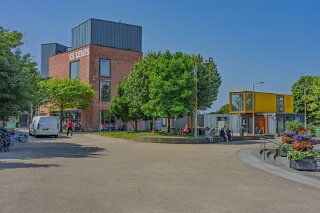
C.S. LEWIS SQUARE IN BELFAST
C.S. LEWIS SQUARE 8 JULY 2026 [EAST BELFAST]
Navigating Narnia: The Art, Sculptures, and Street Culture of C.S. Lewis Square
Located in the heart of East Belfast at the intersection of the Connswater and Comber Greenways, C.S. Lewis Square is a remarkable civic space where literature, public sculpture, and urban street art converge.
Opened in late 2016 to mark the 53rd anniversary of the author's death, the square celebrates Belfast-born Clive Staples Lewis (1898–1963). While best known for his towering children's classic The Chronicles of Narnia, Lewis was a formidable intellectual, Oxford don, and theologian whose deep-seated memories of the Ulster landscape—specifically the undulating Mourne Mountains—profoundly shaped the topography of his fictional worlds.
The Sculptural Trail: Narnia in Bronze
The defining feature of the square is an extraordinary trail of seven monumental bronze sculptures. These works embody key characters from The Lion, the Witch and the Wardrobe, casting a narrative spell across the landscaped plaza.
Aslan the Lion: Standing as the majestic centrepiece of the square, this immense, finely detailed bronze lion symbolises nobility, sacrifice, and ultimate authority. His presence anchors the entire open-air gallery.
The White Witch: Captured in mid-stride with a sharp, glacial coldness, her regal stance and icy crown evoke the perpetual winter she inflicted upon Narnia.
Mr. Tumnus: The gentle faun stands near a replica gas lamp, complete with his umbrella and scarf, capturing the poignant moment he first encounters a "daughter of Eve."
The Beaver Family: Mr. and Mrs. Beaver are rendered with a wonderful, tactile warmth, depicting them mid-conversation as they guide the Pevensie children through the snow.
Maugrim: The captain of the White Witch's secret police is portrayed with predatory, low-slung tension, his wolfish gaze injecting a sense of narrative danger into the public space.
The Stone Table: An unsettling, split block that echoes the deeper theological themes of magic, betrayal, and redemption underlying Lewis's text.
The Robin: Perched quietly on a branch, this small but vital guide represents hope and the subtle stirring of a Narnian spring.
The Master Sculptors Behind the Bronze
The physical execution of the square relies on three highly respected Irish sculptors, each contributing a distinct tactile philosophy to the space.
Maurice Harron
The lion's share of the character representations—including Aslan, the White Witch, Tumnus, Maugrim, and the Beavers—was created by Derry-born sculptor Maurice Harron. Renowned for his ability to embed historical and literary narratives into public works (such as his famous Hands Across the Divide monument in Derry), Harron uses textured, deeply expressive bronze casting. His work on the Narnia pieces balances figurative realism with a sense of mythical gravity, ensuring the characters remain accessible to children while holding their own as serious contemporary sculptures.
Ross Wilson
Belfast's own Ross Wilson contributed the conceptual foundation of the trail, most notably with The Searcher, an earlier companion sculpture located nearby at the Holywood Road Library. Wilson's art is characterised by a raw, emotional intensity and a brilliant use of texture. His sculptural style frequently deals with memory, faith, and local identity, capturing the quiet, contemplative interior life of his subjects.
Alan Burke
Bringing precision craftsmanship to the environment, sculptor Alan Burke contributed technical finesse and thematic weight to the landscape elements of the trail. His work balances the more organic, figurative bronze forms of Harron with structured, symbolic geometric volumes, grounding the narrative elements firmly within the architectural reality of the public plaza.
Street Art and the Urban Fabric
Beyond the formal bronze monuments, C.S. Lewis Square is bordered by an evolving canvas of vibrant street art. The surrounding gable walls and industrial facades feature murals that bridge the gap between classic literature and modern urban culture.
These spray-painted works feature a mix of stylized Narnian imagery, local historical portraits, and contemporary geometric abstract designs. This interaction between traditional bronze casting and dynamic street art transforms the square from a static memorial into a living, breathing community hub where the industrial heritage of East Belfast meets international fantasy.
Navigating Narnia: The Art, Sculptures, and Street Culture of C.S. Lewis Square
Located in the heart of East Belfast at the intersection of the Connswater and Comber Greenways, C.S. Lewis Square is a remarkable civic space where literature, public sculpture, and urban street art converge.
Opened in late 2016 to mark the 53rd anniversary of the author's death, the square celebrates Belfast-born Clive Staples Lewis (1898–1963). While best known for his towering children's classic The Chronicles of Narnia, Lewis was a formidable intellectual, Oxford don, and theologian whose deep-seated memories of the Ulster landscape—specifically the undulating Mourne Mountains—profoundly shaped the topography of his fictional worlds.
The Sculptural Trail: Narnia in Bronze
The defining feature of the square is an extraordinary trail of seven monumental bronze sculptures. These works embody key characters from The Lion, the Witch and the Wardrobe, casting a narrative spell across the landscaped plaza.
Aslan the Lion: Standing as the majestic centrepiece of the square, this immense, finely detailed bronze lion symbolises nobility, sacrifice, and ultimate authority. His presence anchors the entire open-air gallery.
The White Witch: Captured in mid-stride with a sharp, glacial coldness, her regal stance and icy crown evoke the perpetual winter she inflicted upon Narnia.
Mr. Tumnus: The gentle faun stands near a replica gas lamp, complete with his umbrella and scarf, capturing the poignant moment he first encounters a "daughter of Eve."
The Beaver Family: Mr. and Mrs. Beaver are rendered with a wonderful, tactile warmth, depicting them mid-conversation as they guide the Pevensie children through the snow.
Maugrim: The captain of the White Witch's secret police is portrayed with predatory, low-slung tension, his wolfish gaze injecting a sense of narrative danger into the public space.
The Stone Table: An unsettling, split block that echoes the deeper theological themes of magic, betrayal, and redemption underlying Lewis's text.
The Robin: Perched quietly on a branch, this small but vital guide represents hope and the subtle stirring of a Narnian spring.
The Master Sculptors Behind the Bronze
The physical execution of the square relies on three highly respected Irish sculptors, each contributing a distinct tactile philosophy to the space.
Maurice Harron
The lion's share of the character representations—including Aslan, the White Witch, Tumnus, Maugrim, and the Beavers—was created by Derry-born sculptor Maurice Harron. Renowned for his ability to embed historical and literary narratives into public works (such as his famous Hands Across the Divide monument in Derry), Harron uses textured, deeply expressive bronze casting. His work on the Narnia pieces balances figurative realism with a sense of mythical gravity, ensuring the characters remain accessible to children while holding their own as serious contemporary sculptures.
Ross Wilson
Belfast's own Ross Wilson contributed the conceptual foundation of the trail, most notably with The Searcher, an earlier companion sculpture located nearby at the Holywood Road Library. Wilson's art is characterised by a raw, emotional intensity and a brilliant use of texture. His sculptural style frequently deals with memory, faith, and local identity, capturing the quiet, contemplative interior life of his subjects.
Alan Burke
Bringing precision craftsmanship to the environment, sculptor Alan Burke contributed technical finesse and thematic weight to the landscape elements of the trail. His work balances the more organic, figurative bronze forms of Harron with structured, symbolic geometric volumes, grounding the narrative elements firmly within the architectural reality of the public plaza.
Street Art and the Urban Fabric
Beyond the formal bronze monuments, C.S. Lewis Square is bordered by an evolving canvas of vibrant street art. The surrounding gable walls and industrial facades feature murals that bridge the gap between classic literature and modern urban culture.
These spray-painted works feature a mix of stylized Narnian imagery, local historical portraits, and contemporary geometric abstract designs. This interaction between traditional bronze casting and dynamic street art transforms the square from a static memorial into a living, breathing community hub where the industrial heritage of East Belfast meets international fantasy.
CS LEWIS SQUARE EAST BELFAST