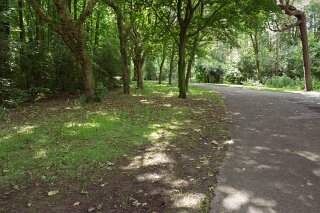
I REALLY LIKE THIS PARK - ESPECIALLY THE TREES
JULY 2026 ORMEAU PARK WAS AT THE TOP OF MY LIST OF PLACES TO PHOTOGRAPH [THERE WAS AN ONGOING HEATWAVE]
Ormeau Park is a unique urban space that beautifully reflects both its grand aristocratic origins and its current role as a highly active, public green lung for Belfast.
Historic Origins as a Private Estate
The park was once a sprawling private country estate. The land was originally owned by the prominent Donegall family, who established it as their main residence in 1807 after moving from their town house. George Chichester, the 2nd Marquess of Donegall, expanded the property significantly, building a massive Tudor-Revival mansion known as Ormeau House in the 1820s. Surrounded by roughly 200 acres of designed parkland, fields, and a home farm, it was one of the grandest private estates outside the city centre.
However, spiralling family debts forced the 3rd Marquess to abandon the property in the 1860s in favour of the newly built Belfast Castle on the opposite side of the city. In 1869, Belfast Corporation purchased the land to create the city's first municipal park, which officially opened to the public in 1871. Following a young architect's winning design, much of the original estate's layout remains visible today, though Ormeau House itself was demolished.
Current Status and Future Plans
Today, the park spans approximately 137 acres and serves as a vital environmental and recreational sanctuary. While visitors often notice a lean aesthetic or signs of a constrained municipal maintenance budget in the hard infrastructure—such as the paths or old fixtures—the horticultural heritage is deeply respected. The magnificent specimen trees, old wooded areas, and mature planting beds reflect centuries of careful growth and remain a primary focus for Belfast City Council's environmental teams.
Regarding future developments, the park is set to benefit from significant structural and accessibility improvements:
The Lagan Footbridge Project: A long-anticipated pedestrian and cycle bridge is planned to connect the former Gasworks site directly to the Ormeau Embankment, which will pull the park much closer to the urban core. While broader infrastructure legalities have temporarily paused the contract award, it remains a highly active future plan.
Strategic Green Networks: The park is centrally integrated into the city's broader Green and Blue Infrastructure Plan, aimed at boosting local biodiversity, managing sustainable drainage along the river corridor, and securing dedicated funding to restore aging park assets over the next decade.
Opening Hours and Night Access
The park is not open at night. Like most municipal parks managed by Belfast City Council, it operates strictly on a "dawn to dusk" policy. It opens daily at 7:30 AM, and closing times adjust seasonally, locking at sunset (ranging from around 4:30 PM in the depths of winter to around 9:00 PM or 9:30 PM during mid-summer). The only common exceptions to night access are during major ticketed cultural events, such as the annual Belsonic music festival or special council-approved summer campsites.
Safety and Local Context
In general, the park is widely used and considered safe during daylight hours, bustling with joggers, families, dog walkers, and sporting clubs utilizing the tennis courts and BMX tracks. Like any major urban park, it is best avoided once daylight fades or after closing hours, as unlit wooded sections can feel isolated.
Geographically, the park does not belong to the neighbourhood of Stranmillis. Stranmillis sits on the opposite (western) side of the River Lagan. Instead, the park serves as the boundary anchor between the vibrant, diverse Ormeau Road corridor to its west and the residential Ravenhill Road area to its east.
The visual contras I observed with political flags is common to Belfast's complex urban landscape. While the surrounding residential streets or main arterial routes frequently feature intense displays of flags or cultural symbols depending on the neighbourhood or season, the council enforces a strict policy keeping municipal parks neutral, inclusive, and shared community spaces.
Ormeau Park is a unique urban space that beautifully reflects both its grand aristocratic origins and its current role as a highly active, public green lung for Belfast.
Historic Origins as a Private Estate
The park was once a sprawling private country estate. The land was originally owned by the prominent Donegall family, who established it as their main residence in 1807 after moving from their town house. George Chichester, the 2nd Marquess of Donegall, expanded the property significantly, building a massive Tudor-Revival mansion known as Ormeau House in the 1820s. Surrounded by roughly 200 acres of designed parkland, fields, and a home farm, it was one of the grandest private estates outside the city centre.
However, spiralling family debts forced the 3rd Marquess to abandon the property in the 1860s in favour of the newly built Belfast Castle on the opposite side of the city. In 1869, Belfast Corporation purchased the land to create the city's first municipal park, which officially opened to the public in 1871. Following a young architect's winning design, much of the original estate's layout remains visible today, though Ormeau House itself was demolished.
Current Status and Future Plans
Today, the park spans approximately 137 acres and serves as a vital environmental and recreational sanctuary. While visitors often notice a lean aesthetic or signs of a constrained municipal maintenance budget in the hard infrastructure—such as the paths or old fixtures—the horticultural heritage is deeply respected. The magnificent specimen trees, old wooded areas, and mature planting beds reflect centuries of careful growth and remain a primary focus for Belfast City Council's environmental teams.
Regarding future developments, the park is set to benefit from significant structural and accessibility improvements:
The Lagan Footbridge Project: A long-anticipated pedestrian and cycle bridge is planned to connect the former Gasworks site directly to the Ormeau Embankment, which will pull the park much closer to the urban core. While broader infrastructure legalities have temporarily paused the contract award, it remains a highly active future plan.
Strategic Green Networks: The park is centrally integrated into the city's broader Green and Blue Infrastructure Plan, aimed at boosting local biodiversity, managing sustainable drainage along the river corridor, and securing dedicated funding to restore aging park assets over the next decade.
Opening Hours and Night Access
The park is not open at night. Like most municipal parks managed by Belfast City Council, it operates strictly on a "dawn to dusk" policy. It opens daily at 7:30 AM, and closing times adjust seasonally, locking at sunset (ranging from around 4:30 PM in the depths of winter to around 9:00 PM or 9:30 PM during mid-summer). The only common exceptions to night access are during major ticketed cultural events, such as the annual Belsonic music festival or special council-approved summer campsites.
Safety and Local Context
In general, the park is widely used and considered safe during daylight hours, bustling with joggers, families, dog walkers, and sporting clubs utilizing the tennis courts and BMX tracks. Like any major urban park, it is best avoided once daylight fades or after closing hours, as unlit wooded sections can feel isolated.
Geographically, the park does not belong to the neighbourhood of Stranmillis. Stranmillis sits on the opposite (western) side of the River Lagan. Instead, the park serves as the boundary anchor between the vibrant, diverse Ormeau Road corridor to its west and the residential Ravenhill Road area to its east.
The visual contras I observed with political flags is common to Belfast's complex urban landscape. While the surrounding residential streets or main arterial routes frequently feature intense displays of flags or cultural symbols depending on the neighbourhood or season, the council enforces a strict policy keeping municipal parks neutral, inclusive, and shared community spaces.
SECOND VISIT TO ORMEAU PARK